FDI fragmentation and green shift
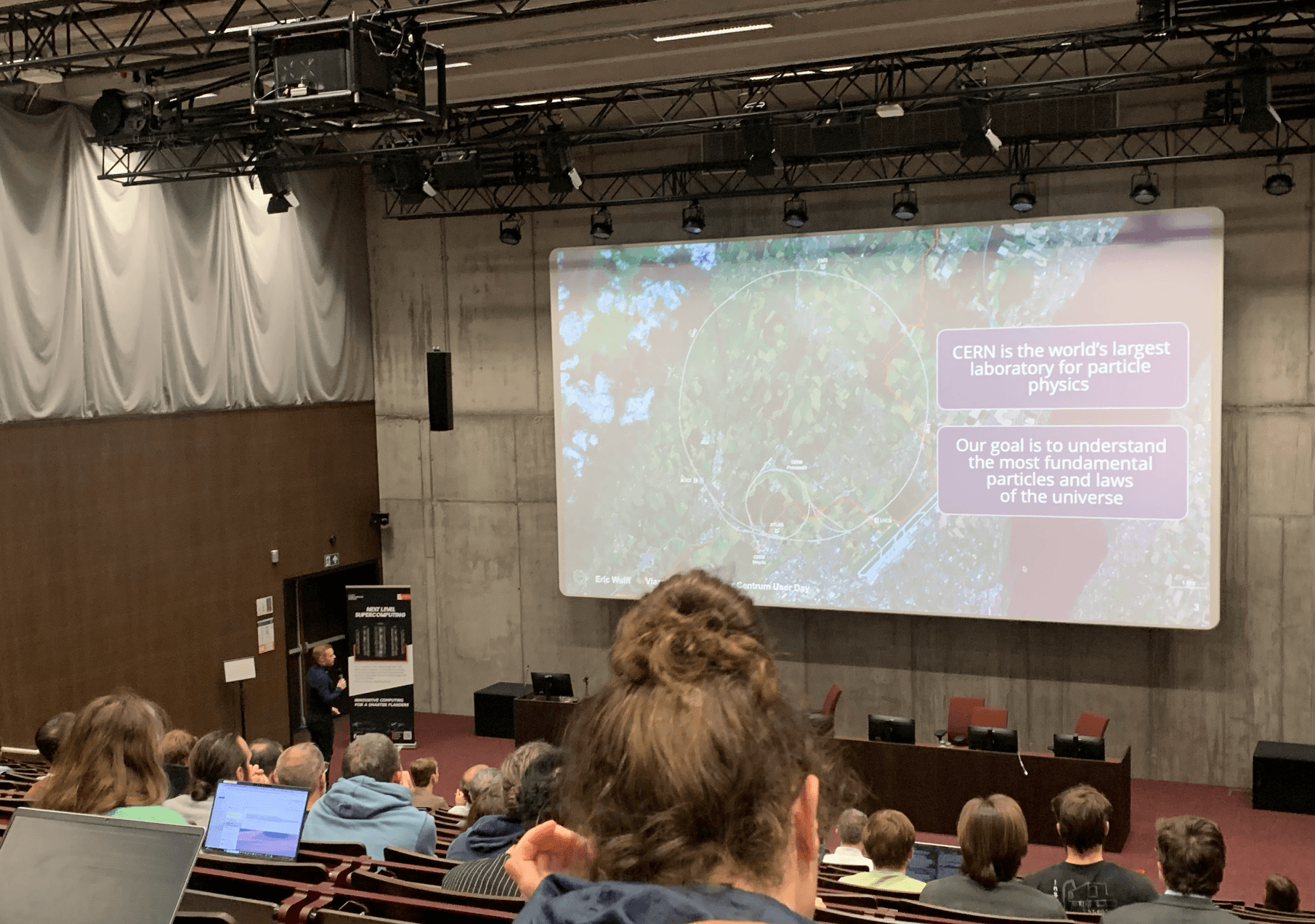
We attended the Southeast Asia Trade and Development Forum 2025 at the Dusit Thani Bangkok, organised by the International Institute for Trade and Development with UNCTAD[1]Link to footnote. Keynotes from Jeffrey Sachs on global trade shifts, Supavud Saicheua (Chairman, Thailand's National Economic and Social Development Council) on domestic industrial adaptation, and Melinda Good (World Bank Director for Thailand and Myanmar) on financing inclusive growth framed a region at an inflection point.
Dr. Bruno Casella and Dr. Kirida Bhaopichitr presented UNCTAD's World Investment Report 2025: foreign direct investment is shifting toward green industries, digital infrastructure, and low-carbon manufacturing, with greenfield digital-services investment in the region up sixfold since 2020, yet less than 20% of national digital strategies align their targets with investment promotion agencies. This recap follows what we heard on the floor: FDI fragmentation, supply-chain realignment, and where spatial intelligence sits as connective tissue between digital and green transitions.
Policy misalignment leaves high-potential climate-tech verticals underfunded and disconnected from regional sustainability agendas. Spatial intelligence is the bridge layer between digital and green transitions.
For operators, this means FDI is available, but not automatically accessible to ventures that sit between software and physical environmental outcomes. Investment promotion agencies optimise for headline job creation and export revenue; digital ministries optimise for connectivity and platform economies. Climate deployment falls into the gap.
Digital economy and climate deployment
Jackie Chang, President and COO of Delta Electronics Thailand, outlined how multinationals are expanding regional footprints in Vietnam, Indonesia, and Malaysia while investing in smart manufacturing, EV charging, energy storage, and AI-driven liquid cooling for low-carbon infrastructure. Corporate capital is moving; public coordination is lagging.
We cannot treat the digital economy and green transition as separate silos. If services are to act as a supercharger for cross-border MSME scaling, as World Bank analysis suggests, regional venture capital must channel software-driven data solutions into physical environmental outcomes. Spatial-intelligence platforms that verify renewable deployment, track supply-chain emissions, and monitor land-use change sit precisely at this intersection.
Spatial intelligence as connective tissue
For Impact Intelligence Lab, the forum reinforced our core thesis: data, AI, and systems thinking must link digital infrastructure investment to measurable environmental performance. Operators should engage investment promotion agencies with diligence-ready MRV products, not abstract climate narratives. Policymakers should embed spatial-verification requirements into digital-economy masterplans so FDI incentives align with decarbonisation targets.
The operational takeaway for founders is to map funding channels explicitly: which agencies control green FDI tax holidays, which digital economy grants fund IoT and AI, and where climate criteria appear in neither. Build coalitions that make spatial intelligence legible to trade ministries and environment ministries simultaneously.
Southeast Asia's new FDI realities reward ventures that translate geopolitical fragmentation into deployable, verified, cross-border data infrastructure, not those waiting for perfect policy coherence.
ASEAN deployment playbook
For policymakers, the forum exposed a coordination deficit that climate-tech founders can help close. National digital strategies and investment promotion agency targets diverge in more than 80% of cases, leaving green FDI incentives disconnected from the digital infrastructure that enables MRV at scale. UNCTAD's World Investment Report 2025 documents the shift toward low-carbon manufacturing, but without aligned spatial-verification requirements in investment criteria, capital flows toward headline job creation rather than measurable environmental outcomes.
For policymakers
Close the coordination gap
For founders
Make MRV legible to capital
Delta Electronics Thailand's regional expansion illustrates how corporates are internalising this gap. Jackie Chang outlined investments in smart manufacturing, EV charging, energy storage, and AI-driven liquid cooling across Vietnam, Indonesia, and Malaysia. These are physical assets that require spatial intelligence to verify grid-emission attribution, deployment timelines, and supply-chain Scope 3 impacts. Operators who can deliver diligence-ready MRV to both investment promotion agencies and corporate sustainability teams occupy a structurally underserved position.
EV charging + storage
Physical assets need verified siting, deployment timelines, and grid-emissions attribution to support green investment claims.
Smart manufacturing
Cross-border plants require consistent Scope 1–2 baselines and comparable reporting formats across jurisdictions.
AI-driven liquid cooling
Data-center energy efficiency claims depend on measurement primitives and transparent methodology, not vendor statements.
- 1.UNCTAD
- 2.Forum panel discussion at the Southeast Asia Trade and Development Forum, /insights/sea-forum-recap-2.png