The Charlemagne corridor
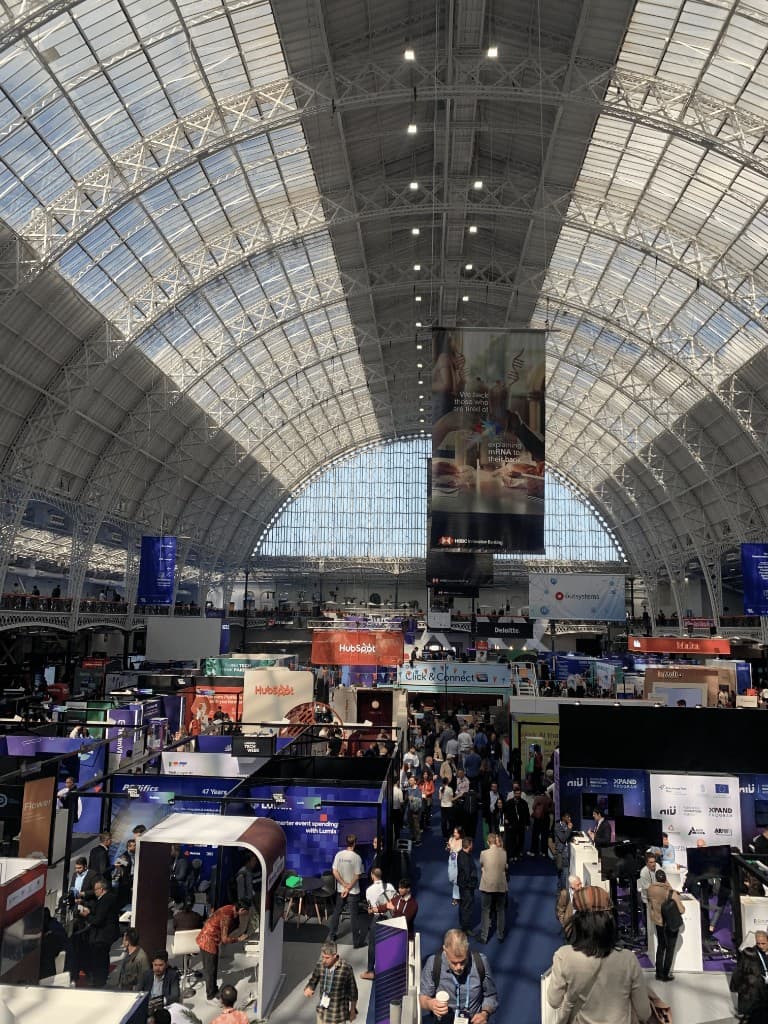
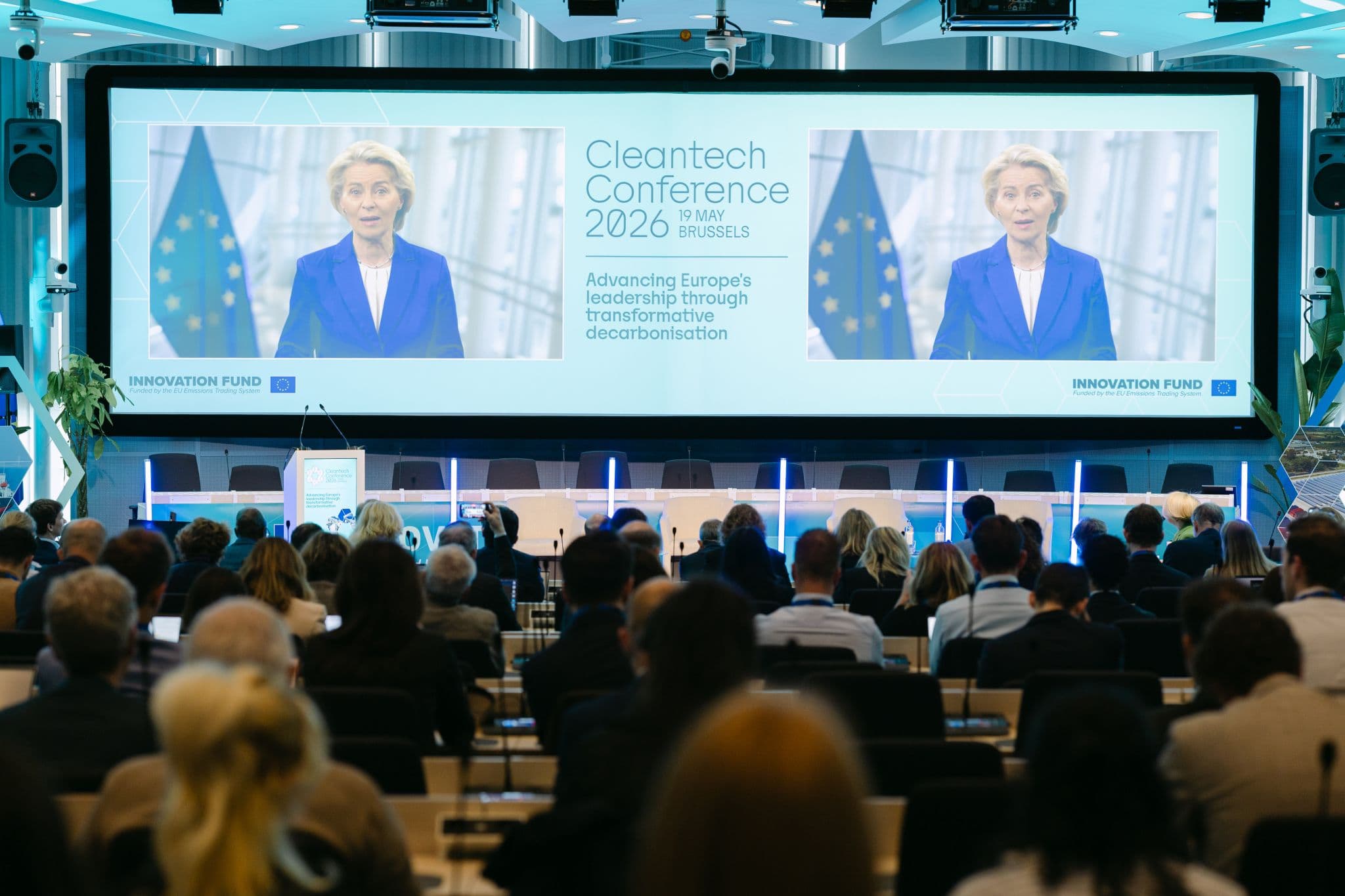
We were onsite at the 2026 Cleantech Conference[8]Link to footnote[23]Link to footnote on 19 May 2026 at the Charlemagne Building in Brussels, co-organised by CINEA and the European Commission's DG CLIMA[34]Link to footnote. Multi-hundred onsite delegates and a global online audience, policymakers, industrial off-takers, Innovation Fund project awardees, and public-private finance syndicates, converged on a shared diagnosis: the primary challenge has evolved from proving technological viability to establishing robust capital stacks for first-of-a-kind (FOAK) commercial plants, de-risking high-CAPEX project infrastructure, and generating localised demand-side market signals.[28]Link to footnote
That shift framed every session we followed. Europe still leads in early-stage innovation, yet speakers and panels returned repeatedly to late-stage financing gaps, elevated energy costs, fragmented internal markets, and competition from highly subsidised foreign markets, most notably the United States and China.[18]Link to footnote[15]Link to footnote[5]Link to footnote
This briefing synthesises what we heard on the floor and the strategic data, policy announcements, and financial flows from Europe's premier clean technology conferences between 2024 and 2026, including gatherings of the Cleantech Group[50]Link to footnote[36]Link to footnote[4]Link to footnote, the Cleantech for Europe[49]Link to footnote[40]Link to footnote[38]Link to footnote[37]Link to footnote[30]Link to footnote[24]Link to footnote[11]Link to footnote[3]Link to footnote[2]Link to footnote[1]Link to footnote Coalition, and industrial implementation frameworks led by CINEA and DG CLIMA.
Core thematic clusters
The deliberations spanning these key conferences reveal a marked transition in the strategic priorities of the European cleantech ecosystem. The dialogue has evolved from long-term net-zero target setting toward near-term industrial survival, supply chain sovereignty, and macroeconomic competitiveness. Four dominant thematic clusters emerged across the sessions.
Decarbonisation as the core driver of economic competitiveness
The historical paradigm that positioned carbon reduction policies as an economic cost has been replaced by the consensus that deep industrial decarbonisation is the primary mechanism to protect Europe's future economic resilience and strategic autonomy. Plagued by structurally high local energy costs and a heavy reliance on volatile global supply networks, European heavy industry views transition technologies as defensive shields. This theme directly aligns with the findings of the Draghi Report on the Future of European Competitiveness, which warned that failing to coordinate industrial and trade policies while pursuing rapid climate transition risks locking Europe into a trajectory of industrial stagnation and dependency.
Bridging the scale-up "valleys of death"
While Europe is recognised as a global innovation powerhouse in validating early-stage clean technologies, it continues to face a critical bottleneck in scaling, industrialising, and deploying these technologies at a climate-relevant scale. The sector faces "two valleys of death" for hardware startups: the first represents the transition from bench-scale prototype to first physical demonstration, and the second represents the capital-intensive scaling from a demonstration pilot to full-scale commercial manufacturing. This capital constraint requires public guarantees and blended finance structures to absorb early technology risk and make projects bankable for commercial lenders.
Data centre energy demands and AI infrastructure convergence
The rapid deployment of artificial intelligence has introduced an unprecedented demand-pull for zero-carbon baseload energy, grid flexibility, and thermal efficiency. Data centres currently consume an estimated 1% to 2% of global electricity, a metric projected to climb to 3% to 4% by 2030. By 2030, European data centres alone are projected to consume an amount of electricity equivalent to the combined demand of Portugal, Greece, and the Netherlands. This historic energy demand has positioned AI infrastructure operators as key off-takers and investment partners for advanced energy systems, long-duration energy storage, and novel chip-level cooling systems.
Creating demand-side market signals and public procurement reform
There is a growing consensus that European cleantech cannot scale based on supply-side public grants alone. The industry requires a structural "demand shock" to build reliable local markets for clean technologies. Speakers repeatedly emphasised the massive scale of Europe's public procurement budgets, which total approximately €2.2 trillion annually across the EU, representing funds that should be systematically directed toward purchasing European-made clean technologies and materials through localised component rules and environmental criteria.
Prominent speakers and key messages
The panels and keynotes across the designated assemblies brought together high-level policy architects, clean-tech CEOs, and global financial strategists. Their contributions provided the policy directives and commercial pathways summarised below.
Prominent speakers and key messages
Policy architects, cleantech CEOs, and financial strategists
Innovation Fund and the Industrial Heat Auction
A major announcement was delivered during the 2026 Cleantech Conference in Brussels, where the European Commission officially confirmed a €1 billion second round of the Innovation Fund Industrial Heat Auction.[35]Link to footnote This initiative builds upon the pilot scheme, which awarded approximately €400 million in grants to 65 selected projects across 10 European Economic Area countries to accelerate the deployment of innovative clean-heat solutions.[20]Link to footnote
These projects, spanning less-represented industrial sectors such as pulp and paper, glass, ceramics, and construction materials, are expected to avoid over 6.[41]Link to footnote6 million tonnes of CO₂ emissions over their first 10 years of operation, displacing over 1.5 billion cubic metres of natural gas and producing approximately 16.[31]Link to footnote3 terawatt-hours of decarbonised heat in their first five years. Panel discussions made clear that technology maturity and capital availability are no longer the binding constraints; deployment velocity is. Industrial leaders reported that even TRL-8 solutions stall at interconnection queues and cross-border regulatory friction.
Regional ecosystems should not wait for domestic CBAM-equivalent rules, deploy compliance-ready spatial intelligence now and treat European due-diligence standards as the default export specification.
Clean technology sector focus and emerging breakthroughs
The technological focus across the designated assemblies shifted from incremental improvements to high-impact, deep-tech systems designed to replace carbon-intensive baseload assets.
Clean technology sector focus
High-impact deep-tech systems replacing carbon-intensive baseload assets
Capital deployment and funding dynamics
The funding landscape for European cleantech has entered a phase of post-peak contraction, characterised by smaller deal volumes, a distinct late-stage capital gap, and a shifting emphasis toward market-driven unit economics.[21]Link to footnote
Venture capital and growth equity contraction
Data presented at the summits demonstrates a consecutive decline in equity investment across the EU27.[29]Link to footnote Total cleantech venture capital and growth equity investment fell to €8.[6]Link to footnote2 billion in 2025, down from €8.7 billion in 2024 and a historical peak of €11.6 billion in 2023.
European cleantech investment volumes (€ billion)
European cleantech deal volume
This funding contraction is particularly pronounced at the Series B stage, representing the critical scaling phase where capital is deployed to build first commercial plants.[7]Link to footnote Series B funding halved from €2.9 billion across 74 deals in 2024 to €1.8 billion across 43 deals in 2025, highlighting a severe capital constraint. Conversely, growth equity showed resilience, rising to €3.5 billion in 2025 (up from €2.7 billion in 2024), largely driven by massive infrastructure demands linked to the AI data-centre boom. Sweden-based EcoDataCenter's €450 million growth equity round in March 2025, the largest equity deal of that quarter, demonstrates how energy-efficient computing and grid infrastructure are driving large late-stage capital allocations.
Comparative global capital flows
The investment dynamics reveal a widening gap between Europe and the United States. The European Union's total investment of €8.2 billion in 2025 represents only 18% of global cleantech capital, lagging far behind the United States, which captured 54% of global investment at €23.1 billion. The US capital market has sustained high volumes through its deep private capital stack and the long-term support of the Inflation Reduction Act.[27]Link to footnote
Strategic public financing initiatives
To address this imbalance, European public financial institutions launched several key initiatives to de-risk clean technology scaling and unlock private capital:[43]Link to footnote
- The Scaleup Europe Fund: Officially announced by the European Commission, this €5 billion market-driven fund of funds is designed to launch in April 2026.[33]Link to footnote Co-backed by the European Investment Bank and major institutional investors, it will target large late-stage growth rounds of €100–150 million, preventing European scale-ups from relocating their manufacturing operations to the US or Asia.[10]Link to footnote
- EIB TechEU Guarantee Suite: Implemented in June 2025, this program provides a multi-tier guarantee structure including a €250 million CleantechEU Guarantee Scheme to ease collateral requirements for hardware scaling, a €500 million PPA counter-guarantee pilot to secure long-term clean electricity off-take, and €3 billion in dedicated guarantees for wind manufacturing and grid upgrades.[9]Link to footnote
- Industrial Decarbonisation Bank: Operating under the Clean Industrial Deal, this entity aims to mobilise up to €100 billion in public and private capital to support CAPEX-intensive projects in hard-to-abate industries.
Policy frameworks and regulatory developments
In Europe, clean technology deployment is structurally driven by policy, where regulatory directives act as the primary market creation mechanism. Several key policy files and regulatory initiatives are currently shaping the clean-tech sector's investment landscape.
Policy frameworks and regulatory developments
Regulatory directives shaping the cleantech investment landscape
At the 2026 Cleantech Conference, CINEA and DG CLIMA framed the EU Innovation Fund as the industrial counterpart to border-level carbon pricing: while CBAM imposes carbon-cost equivalence on energy-intensive imports such as steel, cement, and electricity, the Corporate Sustainability Due Diligence Directive (CSDDD) extends environmental and human-rights diligence across entire upstream and downstream value chains.[19]Link to footnote[16]Link to footnote For climate-tech operators, these instruments function as a combined compliance stack, not isolated mandates.
Strategic alliances and collaborative ecosystems
The physical deployment of clean technology requires complex, multi-stakeholder ecosystems to coordinate planning and align commercial interests. The conferences served as the primary catalyst for several high-impact joint ventures and coalitions.
Expansion of the Cleantech for Europe Scale-Up Coalition
A key milestone of the 2024–2025 summits was the rapid expansion of the Cleantech for Europe Scale-Up Coalition. The coalition doubled its membership from 11 to 22 scaling companies. Key additions include:
- Battolyser Systems: Pioneering integrated nickel-iron battery-electrolyzer systems for green hydrogen production and storage.[14]Link to footnote
- Heart Aerospace: Advancing regional electric aviation and hybrid-electric engines.
- INERATEC: Scaling micro-structured chemical reactor technologies to produce e-fuels from point-source carbon dioxide and green hydrogen.
The coalition acts as a unified platform to represent the interests of industrial scale-ups, advising the European Commission directly on structural scaling bottlenecks and draft regulations.
Regional and national coalition cohesion
To address local scaling barriers, a highly aligned network of regional cleantech coalitions has crystallised under the broader European umbrella:[12]Link to footnote
- Cleantech for Iberia: Focused on positioning Spain and Portugal as Europe's clean industrial hubs, utilising high renewable penetration to attract energy-intensive manufacturing.[44]Link to footnote
- Cleantech for Baltics and Cleantech Scandinavia: Spearheading regional cross-border initiatives, such as the Vilnius Declaration on offshore wind development and the integration of Baltic startups into broader European funding schemes.[25]Link to footnote[46]Link to footnote[47]Link to footnote[48]Link to footnote
- Cleantech for UK: Facilitating collaboration on carbon markets, carbon capture and storage (CCS), and North Sea offshore wind, preserving bilateral pathways between the UK and the EU Single Market.
Concurrently, initiatives like the Tech for Net Zero Allianz and the European Parliament's Cleantech Friendship Group (launched with 32 MEPs and President Ursula von der Leyen) have strengthened direct lines of communication between clean-tech CEOs and policy developers.[45]Link to footnote[39]Link to footnote
Geographic footprints and regional disparities
The distribution of clean tech activity in Europe is highly concentrated, revealing a stark divergence between absolute investment volumes and per-capita performance.
Absolute market dominance: the Big Five
In terms of total equity deals and capital allocation, the traditional European industrial giants continue to dominate the landscape. Germany maintained its leading position with 110 deals, followed by France (71), the Netherlands (66), Spain (43), and Sweden (36). Italy achieved a record-breaking year with 36 deals, although the vast majority (over 90%) were highly concentrated at the early seed and Series A stages, highlighting a structural lack of late-stage local capital to scale these companies domestically.
Cleantech equity deals by country (2025)
Per-capita leadership: the Nordic and Baltic vanguard
When clean technology investment is evaluated on a per-capita basis, a completely different hierarchy emerges, with smaller Nordic and Baltic nations vastly outperforming the rest of the continent:
Per-capita cleantech investment (€)
Only Finland (€115) and Sweden (€94) vastly exceeded the United States' per-capita cleantech investment of €24. Major industrial economies like Germany (€24) and France (€22) barely match or lag behind the US, while Southern and Eastern European regions (excluding the Baltics) remain severely underrepresented, creating a significant geographical imbalance in the European transition.[32]Link to footnote
The Baltic cleantech emergence
Despite their smaller absolute size, the Baltic states are stepping up as a key vanguard for clean-tech innovation.[17]Link to footnote The region attracted a record €757 million in capital in 2024, driven by a strong alignment between national policies and security objectives. Estonia, Latvia, and Lithuania are actively focusing on energy security, resource efficiency, and sustainable reindustrialisation in the wake of geopolitical tensions. Lithuania, in particular, achieved a historic milestone in April 2025, producing 97% of the electricity it consumed (with wind energy accounting for 58% of the mix), showcasing rapid progress toward energy independence.
Structural bottlenecks and challenges to adoption
The consensus across all flagship assemblies is that Europe's transition is fundamentally constrained by structural barriers to commercial scaling rather than technological limits.
The growth-stage debt and equity void
While European seed and Series A funding remains relatively liquid, the market suffers from a critical shortage of late-stage growth capital, often called the "missing middle.[26]Link to footnote" Moving from a pilot facility to a first-of-a-kind (FOAK) commercial plant requires substantial equity and project debt, yet commercial banks routinely refuse to finance these operations due to technology and scaling risks. The absence of deep private credit markets in Europe, compared to the US, forces many high-potential scale-ups to rely on modest public grants or seek capital abroad.
Fragmented internal market and red tape
Europe's internal market remains fragmented across 27 national jurisdictions with diverging regulatory frameworks, grid permitting processes, and subsidy rules.[22]Link to footnote For a cleantech startup, expanding from one member state to another requires navigating varying layers of bureaucracy.[13]Link to footnote This fragmentation limits the ability of European companies to scale rapidly compared to US and Chinese competitors, who operate within massive, single-market jurisdictions.
Elevated energy costs and process electrification limits
European heavy industry is currently locked in an uneven playing field due to local energy costs that are structurally higher than those in North America and Asia. This energy cost differential makes process electrification, such as retrofitting industrial glass, chemical, or paper kilns with electric boilers or high-temperature heat pumps, economically challenging for industrial off-takers without heavy, sustained public subsidies.
Severe grid permitting and interconnection delays
The deployment of clean technologies is fundamentally constrained by electricity grid capacity. Permit processing backlogs of up to a decade for transmission line upgrades, combined with a lack of coordinated planning, mean that even when projects are financed, they are frequently unable to secure a grid connection, resulting in massive curtailment costs and delayed commercial operations.
Digital MRV as export infrastructure
Across supplier forums, the conversation moved beyond disclosure checklists toward continuous verification. CBAM reporting windows demand actual emissions profiles, not default values; CSDDD expects traceable due diligence across tiers of subcontractors, including agricultural smallholders in developing markets. Lightweight spreadsheet workflows cannot scale to either requirement.
Digital MRV platforms that fuse satellite observation, metered facility data, and auditable calculation methodologies offer a path through this complexity. For Southeast Asian operators, the commercial logic is straightforward: embed European-standard data integrity into local decarbonisation projects and connect them directly to premium procurement and transition-finance channels. The Cleantech Conference made evident that this is no longer a voluntary differentiation strategy; it is a condition of market access.
European buyers increasingly require digital MRV platforms that can reconcile facility-level Scope 1 and Scope 2 data with supply-chain Scope 3 attestations. Operators who build compliance-ready architectures now, before domestic mandates catch up, position themselves as infrastructure partners rather than late-adopter vendors. The same spatial verification layers that satisfy CSDDD chain-of-custody requirements can anchor green-finance eligibility for biochar, clean-energy retrofits, and nature-based solutions in emerging economies.
Strategic takeaways and forward-looking outlook
The synthesis of European cleantech events from 2024 to 2026 indicates a structural shift in the continent's approach to the net-zero transition. To maintain its competitive edge and achieve strategic autonomy, the European cleantech ecosystem must execute a coordinated strategy across three core pillars:
1. Transitioning from innovation to deployment
The primary mandate for European policymakers and investors is to pivot resources away from funding repetitive, early-stage R&D toward financing industrial deployment. This requires a rapid rollout of non-dilutive, de-risking mechanisms, such as the Scaleup Europe Fund and EIB's TechEU guarantee schemes, to enable scaling hardware companies to build their FOAK commercial facilities within Europe.
2. Aggressive demand-side market creation
Relying on technology subsidies is insufficient to compete globally. The EU must leverage its purchasing power by enforcing mandatory sustainability, resilience, and local component criteria in public procurement. Creating a "demand shock" via regulatory mandates, such as recycled-content rules for batteries or minimum quotas for green steel in public infrastructure, will provide scaling companies with the stable, bankable off-take contracts required to unlock private debt.
3. Streamlining permitting and grid integration
Unifying and simplifying Europe's regulatory permitting processes is critical to accelerating project delivery. The implementation of the Clean Industrial Deal's fast-track permitting must be synchronised with targeted grid infrastructure investments. This includes the rapid adoption of innovative grid technologies (VPPs, long-duration thermal storage, and high-power charging networks) to maximise the efficiency of existing infrastructure.
Ultimately, the analysis of these landmark assemblies indicates that Europe possesses the technology, the entrepreneurial talent, and the regulatory framework required to lead the global net-zero economy.[42]Link to footnote However, the window of opportunity to capture the industrial and economic value of these innovations is narrowing. Success will depend on the speed and decisiveness with which European institutions, private financiers, and industrial leaders can turn these strategic alignment plans into execution.
- 1.Cleantech Annual Briefing 2025 - Cleantech for Europe
- 2.Summit 2024 - Cleantech for Europe
- 3.Summit 2025 - Cleantech for Europe
- 4.Cleantech Group
- 5.Cleantech Forum Europe 2026 - OneStop ESG
- 6.2025 Cleantech Forum Europe
- 7.Scaling Europe's Cleantech Industry: Key Insights from the Cleantech for Europe Summit 2024 - Skeleton Technologies
- 8.2026 Cleantech Conference: Advancing Europe's leadership through transformative decarbonisation - European Climate, Infrastructure and Environment Executive Agency
- 9.2025 Global Cleantech 100 Trend Watch
- 10.INERATEC joins Cleantech Scale-up Coalition
- 11.“We can finance the green transition, or keep funding fossil fuels” – Dimitri Colin joins Cleantech for Europe
- 12.Thank you for celebrating the 20th anniversary of Cleantech Forum Europe with us in Chantilly - Heyzine
- 13.Cleantech Forum Europe 2024 in Chantilly France - Tradeindia
- 14.Media Release | Green Gravity
- 15.Cleantech Forum North America 2024: A Glimpse Into Sustainable Innovation
- 16.Cleantech Forum Europe 2025 in Chantilly France - Tradeindia
- 17.Baltic Cleantech Q4 Briefing 2023
- 18.CleanTech Forum Europe - Startup Estonia
- 19.Cleantech Forum Europe | Montréal International
- 20.Cleantech Forum Europe (Nov 2026), Sitges Spain - Conference - 10Times
- 21.Event Details | Cleantech Group
- 22.Cleantech Conference 2026: Advancing Europe's leadership through transformative decarbonisation | Catalisti
- 23.2026 Cleantech Conference - EU Blue Economy Observatory - European Union
- 24.Cleantech for Europe's Policy Update - June Edition
- 25.Cleantech for Baltics - Briefing 2024
- 26.Event and Conference List Q4 - 2025 - Critical Capital Partners
- 27.Ep87 Surviving the Two Valleys of Death in APAC Cleantech with Summer Bae, Cleantech Group - Apple Podcasts
- 28.Programme | Cleantech Conference: Driving Sustainable Innovation
- 29.Investment Insights
- 30.Cleantech Q1 Briefing 2025
- 31.your eu cleantech quarterly briefing, https://cdn.prod.website-files.com/626fd2b7495a6f980eab20c8/6810c95b45c8ccd894f99381Q1-2025%20Briefing_2904_compressed.pdf
- 32.2025 Cleantech Conference - ERA Portal Austria
- 33.Commission awards €400 million to European projects to decarbonise heat production
- 34.CLIMA - Newsletter Archives - European Commission
- 35.News and insights, Constructive
- 36.2024 Cleantech 50 to Watch
- 37.Cleantech for Europe's Policy Update - December edition
- 38.Cleantech Q2 Briefing 2024
- 39.APAC: What We Learned from 2024 and What It Means for 2025 | Cleantech Group
- 40.Cleantech Annual Briefing 2024
- 41.Advancing Europe's clean industrial transformation - European Climate, Infrastructure and Environment Executive Agency
- 42.2022 European Tour - Women in Cleantech & Sustainability
- 43.From green ambition to financial prosperity: investigating the dynamics of cleantech firms in Europe - a survey analysis - WebThesis
- 44.Cleantech for Iberia
- 45.Time to scale: Cleantech for Europe Summit 2024
- 46.2025 - Briefing - Cleantech for Baltics
- 47.News and Publications - Cleantech for Baltics
- 48.annual report 2023 - Cleantech for Baltics
- 49.Cleantech Q3 Briefing 2025
- 50.Cleantech Forum Europe 2026