Two tracks at BELSPO
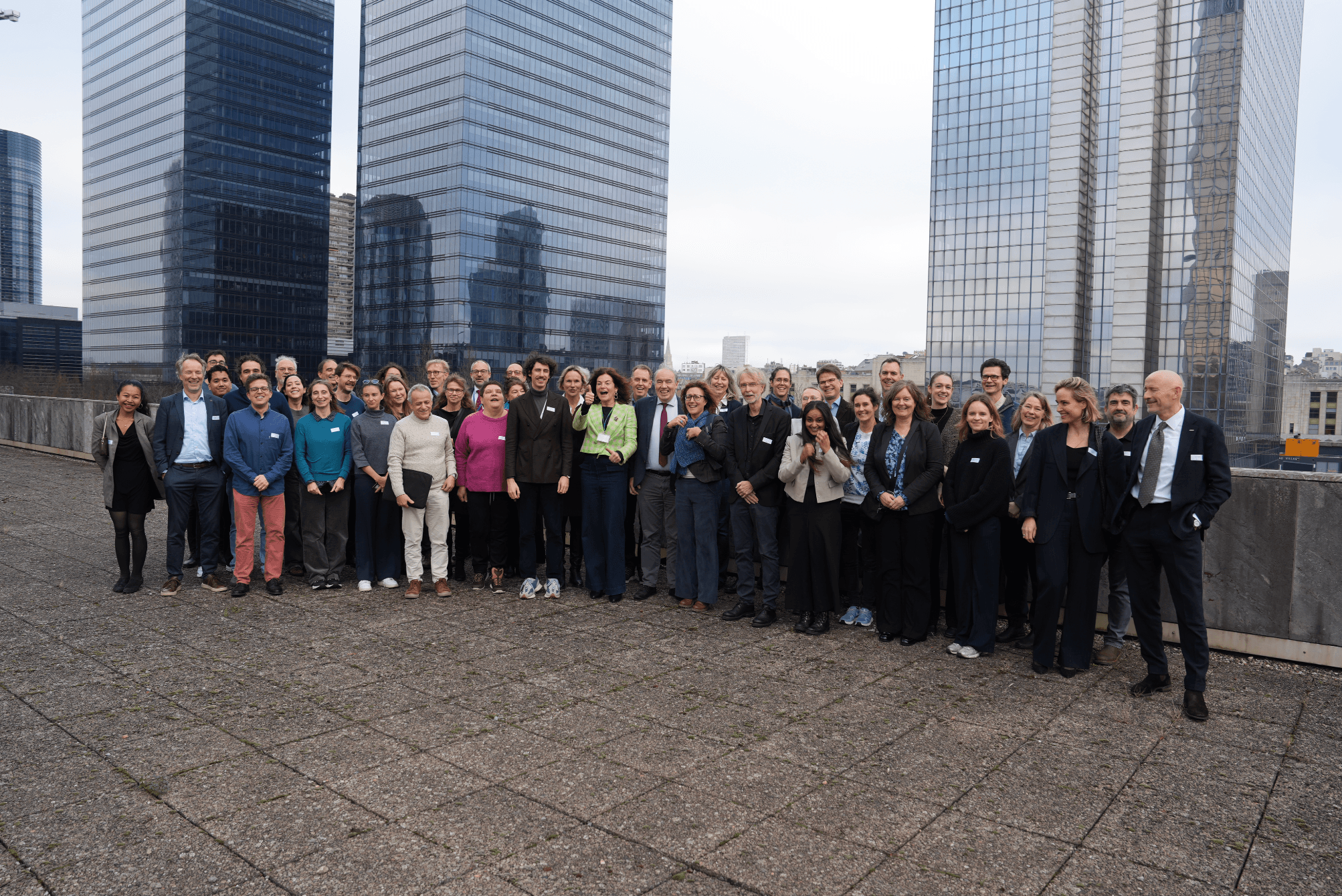
We attended the EQUINOX workshops at Belgian Science Policy Office (BELSPO) headquarters in Brussels on 11–12 December 2025, organised under the Equinox Process[11]Link to footnote by JPI Climate with support from MAGICA. Concluding shortly after the UNFCCC COP30 negotiations in Belém, the parallel tracks gathered national and European policymakers, scientific advisors, funding agency representatives, and financial regulators.[18]Link to footnote
The Equinox Workshop on Societal Transformation in the Face of Climate Change emphasised that successful adaptation and mitigation require moving beyond top-down technocratic mandates toward systematic integration of Social Sciences and Humanities (SSH) to foster public legitimacy and build local civic capacity. In parallel, the Equinox Dialogue on Modelling the Economics of Climate Change delivered a comprehensive critique of conventional Integrated Assessment Models (IAMs), their systemic failure to represent climate damages, adaptation costs, macroeconomic risks, and distributional equity.[13]Link to footnote
Findings from both tracks are structured to inform the Climate Neutrality Forum in May 2026, the European-African CAPA project[10]Link to footnote, and the JPI Climate Strategic Research and Innovation Agenda (SRIA) for the European Research Area (ERA) spanning 2026–2035.
Societal transformation in the face of climate change
The societal transformation track on 11 December 2025, co-organised by the CICERO Center for International Climate Research[1]Link to footnote, focused on the human and institutional dimensions of the ecological transition. This one-day workshop addressed how governance structures, public engagement strategies, and policy design can drive legitimate and equitable climate action.
SOLSTICE Joint Call and related programmes
Societal transformation track, core research presentations
The core question of this track addressed how governance and public engagement must be designed to enable legitimising transformations.[3]Link to footnote Elina Bardram, Director for Climate Resilience and Information Management at DG CLIMA and Mission Manager for the EU Mission on Adaptation to Climate Change, delivered a central directive:[2]Link to footnote
We don't always need to reinvent the wheel, sometimes the most simple solutions are the most powerful. We just need to harness them. Citizens' capacity shouldn't be undermined by policymakers...
This perspective was supported by Siret Talve (Tallinn University, Board Member of the EU Mission on Adaptation to Climate Change) and Anne Maria Eikeset (Lead Researcher at Norges Bank Investment Management), who highlighted the need to align institutional and financial investment practices with community values.
The second roundtable, moderated by Philippe Tulkens (Head of Unit, Climate and Planetary Boundaries, European Commission, DG Research and Innovation), focused on transitioning from identified research gaps to concrete action.
Societal transformation roundtable speakers
From research gaps to concrete action
A notable point of discussion emerged regarding the pacing of transition policies. Some representatives from municipal and European missions advocated for rapid, regulatory-driven interventions to meet the strict carbon timelines of the European Green Deal. However, researchers in the social sciences cautioned that top-down, technocratic pacing, if decoupled from local consultation, can trigger significant public backlash due to immediate cost-of-living impacts. The consensus affirmed that public engagement is most effective when climate policy is integrated with tangible co-benefits, such as improved urban air quality, public health, and localised job creation.[21]Link to footnote[19]Link to footnote[4]Link to footnote
Modelling the economics of climate change
The Equinox Dialogue on Modelling the Economics of Climate Change (11–12 December 2025), was co-organised by The Cambridge Trust for New Thinking in Economics (CTNTE).[14]Link to footnote[15]Link to footnote The dialogue opened with a video message from IPCC Chair Sir Jim Skea, who emphasised the urgent need for national, policy-relevant scenarios that address real-world transition barriers.[23]Link to footnote
Annela Anger-Kraavi (Chief Executive, CTNTE) and Elmar Kriegler (Head of the Research Department, Potsdam Institute for Climate Impact Research, PIK) set the analytical scene by identifying structural flaws within current Integrated Assessment Models (IAMs). The dialogue structured its evaluation of economic modelling around four core limitations:
Omission of physical damages and adaptation costs
Christian Lutz (GWS) & Elmar Kriegler (PIK)
Inadequate treatment of equity and justice
Johannes Emmerling (CMCC) & Marc Vielle (EPFL)
Exclusion of financial flows and macro-financial risks
Phil Summerton (Cambridge Econometrics) & Irene Monasterolo (Utrecht University)
Rigid treatment of technology and CDR risks
Dirk-Jan van der Ven & Theo Rouhette (BSC), Daniela Faggiani Dias (CMCC)
On Day 2, opened by Gregor Laumann (German Aerospace Center, DLR), discussions focused on model usability for financial regulators.[17]Link to footnote Jörn Hoffmann (Application Partnerships Lead, ECMWF) detailed the potential of integrating high-resolution Earth observations with economic projections. Phil Summerton expanded on the challenge of getting the balance right in policy-facing models:
If they're too simple, they are not convincing... policy-makers often just want to know the answer but they also don't want just a 'black box'...
Summerton argued that models must be highly transparent regarding their sensitivities and the specific events or information to which they respond.
A key outcome of this session was a clear message from representatives of the European Central Bank (ECB) and the European Investment Bank (EIB). These institutional actors stated that they require active, empirical support from climate scientists to develop forward-looking climate change risk indicators that can be directly integrated into macroeconomic stress-testing and sovereign risk portfolios.[15]Link to footnote[7]Link to footnote
A clear tension emerged between mainstream neoclassical modellers, who advocated for incrementally adding parameters to existing IAM frameworks, and heterodox economists, who argued that conventional optimisation and equilibrium concepts are structurally incapable of representing a systemic transition. The heterodox perspective maintained that climate policy must be driven by physical boundaries and social objectives, leaving economists to develop the financing structures afterward.[24]Link to footnote
Policy implications
The analytical outcomes of the EQUINOX workshops carry direct, far-reaching implications for both Belgian national and broader European science and climate policies.
European science and adaptation policy
At the European level, the findings of the societal transformation track are designed to directly inform the drafting of the new EU Climate Adaptation Plan and the execution of the Horizon Europe Missions. The proceedings demonstrated that the Mission on Climate Change Adaptation and the Mission for Climate-Neutral and Smart Cities must move beyond funding isolated technological solutions. Instead, they must establish integrated funding calls that require physical science and economic proposals to be co-designed with Social Sciences and Humanities (SSH) to ensure local democratic legitimacy and prevent public backlash.
Redesigning research funding structures
For research funding organisations, the Equinox Process signals a structural shift in how future research agendas are designed across the European Research Area (ERA). The JPI Climate Action Group Enabling Societal Transformation (EST) is leveraging the outputs of these Brussels workshops to define the scope and content of the next phase of the SOLSTICE transnational call.[5]Link to footnote Future funding architectures must prioritise transdisciplinary consortia that bridge macroeconomic modelling with qualitative, bottom-up behavioural research. This strategic direction will be codified in the upcoming JPI Climate Strategic Research and Innovation Agenda (SRIA) for the ERA spanning 2026–2035.
National and European policy recommendations
Strategic directives from the Equinox workshops
This international alignment ensures that Belgian national scientific funding is directly connected to global weather forecasting, early warning networks, and socio-economic adaptation frameworks in highly vulnerable regions, bridging the gap between European domestic science and global climate justice.
Stakeholder perspectives
The EQUINOX workshops brought together four primary stakeholder groups, revealing distinct institutional motivations, contributions, and areas of strategic alignment or conflict.
Academic and research institutions
Represented by leading research bodies such as CICERO, CMCC, GWS, PIK, and UCLouvain, this stakeholder group prioritised scientific rigour, interdisciplinary collaboration, and the overhaul of outdated modelling paradigms. They argued that conventional economic advice has frequently acted as a barrier to climate action by underestimating climate risks and overpromoting standard market-based solutions.[20]Link to footnote[16]Link to footnote Their contribution focused on presenting empirical evidence, such as localised physical risks and behavioural barriers, and demanding long-term, transdisciplinary funding frameworks that place social sciences at the centre of mitigation planning.
Research funders and science managers
Comprising organisations like BELSPO, the Research Council of Norway, the National Science Centre of Poland, and the German Aerospace Center (DLR-PT), this group focused on the administrative mechanics of research governance and strategic coordination within the European Research Area. Their primary concern is maximising the return on public research investments and ensuring that funded science is "actionable" and accessible to policymakers. They contributed by coordinating transnational calls, such as SOLSTICE and the upcoming European Partnerships (STR and RCH), and establishing open science mandates to eliminate research silos.
Financial institutions and asset managers
Represented by Norges Bank Investment Management (NBIM), the European Central Bank (ECB), and the European Investment Bank (EIB), these stakeholders are driven by the urgent need to manage system-wide physical and transition risks to safeguard asset values. They highlighted that current global economic models are virtually useless for micro-prudential supervision and portfolio risk assessment because they fail to represent transition capital costs, regional asset stranding, and financial sector contagion. They actively called on the scientific community to help them develop empirical, forward-looking macro-financial climate risk indicators.
Policymakers and intergovernmental bodies
Including representatives from the European Commission (DG RTD and DG CLIMA), the European Parliament, and national government agencies, this group is responsible for executing decarbonisation mandates under strict legislative timelines. They require clear, legally defensible, and highly communicative scenarios to justify climate regulations to a public increasingly concerned with cost-of-living increases. They cautioned that overly complex, academic modelling can result in inaccessible "black boxes" that hinder rapid policy execution.
Critical analysis
An evaluation of the EQUINOX workshops demonstrates that their primary strength lay in the deliberate, physical integration of the societal transformation and economic modelling tracks.[8]Link to footnote By forcing a direct confrontation between social scientists and macroeconomic modellers at BELSPO, the organisers exposed the fundamental flaw of conventional transition planning: treating behavioural, institutional, and social barriers as minor frictions rather than as the primary determinants of transition feasibility.
However, the discussions exposed several deep, unresolved tensions, logical contradictions, and neglected dimensions that warrant closer examination.
The "black box" usability paradox
A central tension exists between the scientific demand for model complexity and the policy demand for operational simplicity. Modelers argued that to make IAMs realistic, they must integrate multi-sector dynamics, financial risk transmissions, and localised technology transfer parameters. Conversely, policymakers and financial regulators explicitly stated that if a model becomes too complex, it turns into an impenetrable "black box" that cannot be utilised to justify controversial legislative measures. This creates a paradox: a model simple enough to be politically convincing is scientifically inaccurate, while a model complex enough to be scientifically rigorous is politically unusable.
The labour and skill capacity deficit
While both tracks focused extensively on the deployment of advanced technologies, such as Carbon Dioxide Removal (CDR), rapid grid electrification, and residential retrofitting, the discussions revealed a glaring blind spot regarding the severe shortage of skilled labour required to physically execute these transitions across Europe. Decarbonisation scenarios that assume frictionless, rapid technology deployment are structurally decoupled from the physical reality of highly constrained regional labour markets.
Systemic risk distortion through shadow pricing
The dialogue revealed that standard economic models commonly use a single, global shadow carbon price to minimise policy costs across scenarios. As noted by heterodox economists, this practice systematically underestimates actual risk and damage costs, as well as the transition costs to Net Zero. Because the worst physical climate impacts will occur in developing nations, European market metrics fail to reflect these catastrophic systemic tipping points, leading to a profound distortion of the economic justification for early, aggressive mitigation.
Neglect of capital costs and sovereign debt in the Global South
While the economic modelling track rightly criticised the lack of detailed finance in IAM scenarios, the discussion heavily prioritised climate risk indicators for European banking portfolios and classification systems. It largely neglected the compounding sovereign debt crisis in the Global South, where the high cost of capital acts as a primary barrier to transition investments. Economic models that assume frictionless global capital mobilisation completely fail to represent the real-world financial constraints faced by developing nations under Article 9 of the Paris Agreement.
The conflict of local scale in community decision-making
Social researchers noted that when transition decisions are shifted to community-based models, the weight of climate mitigation is often significantly reduced if it is combined with immediate local concerns, such as noise pollution, zoning conflicts, or spatial optimisation. This highlights a fundamental contradiction in the "inclusive co-creation" paradigm: while localising decision-making increases policy legitimacy, it can simultaneously dilute and delay the implementation of national and global decarbonisation targets.
Forward-looking assessment
The strategic outputs of the EQUINOX workshops establish a clear roadmap for the climate science-to-policy interface over the next one to three years (2026–2028), marked by several key milestones.
2026: Model refinement and the Climate Neutrality Forum
In the immediate term, the summary reports published from the BELSPO workshops will serve as foundational inputs for the upcoming Climate Neutrality Forum in May 2026. This forum will focus on translating these structural modelling critiques into concrete modelling protocols, forcing major European modelling groups to systematically incorporate physical damages and localised adaptation costs into the next generation of transition scenarios.
2026: Launching the AU-EU CAPA initiative
On 19 May 2026, the bilateral European-African CAPA project will officially launch its activities with a hybrid Kick-off Meeting in Brussels during the CCSE stakeholder forum. Over the 2026–2027 period, this initiative will focus on "networking the networks," aligning research and climate services directly with African regional priorities across water, food security, and transport, providing a practical model for equitable global research cooperation.[22]Link to footnote
2026: The AMOC in Focus assessment report
Led jointly by JPI Climate and JPI Oceans, this initiative will convene its second major writing workshop in Brussels (29 June–2 July 2026) to finalise a comprehensive review report updating the physical observations and potential tipping points of the Atlantic Meridional Overturning Circulation (AMOC).[6]Link to footnote This report, planned for publication in late 2026, will explicitly bridge the science-policy gap by translating physical ocean dynamics directly into macroeconomic damage and adaptation strategies, helping financial institutions model systemic sovereign risk.
2027–2028: Technical input for the IPCC AR7 and the Global Stocktake
In the medium term, the integrated science-policy frameworks developed under the Equinox Process are structured to serve as direct inputs to the technical dialogue of the next UNFCCC Global Stocktake (2027–2028) and the IPCC Seventh Assessment Cycle (AR7). This will ensure that European climate science maintains its global leadership by providing peer-reviewed methodologies that successfully link economic modelling, physical science, and social humanities.
Recommended areas for urgent investigation
To address the critical gaps exposed during the Brussels workshops, research funding organisations should immediately prioritise the following three areas for further investigation:
- Macro-financial modelling of sovereign risk and capital costs: Research must be funded to develop regionalised economic models that discard the single-carbon-price assumption and explicitly incorporate sovereign debt constraints, borrowing cost differentials, and macro-financial risk transmissions in the Global South.
- The political economy of labour constraints in decarbonisation: Comprehensive empirical studies are required to map physical labour capacities, skill shortages, and vocational training pipelines across European regions, ensuring that modelled technology deployment pathways reflect regional labour supply realities.
- Empirical modelling of social safety nets during transition shocks: Future investigations must evaluate the macroeconomic and behavioural impacts of social support mechanisms, such as basic income or targeted energy transition subsidies, in building public legitimacy and mitigating social pushback during cost-of-living shocks.
Appendix: institutional commitments and modelling paradigms
Key institutional commitments and program details
Key institutional commitments and programme details
Appendix, Equinox Process programmes and milestones
Comparison of transition modelling paradigms
Conventional integrated assessment models (IAMs)
Neoclassical market equilibrium paradigm
Emerging heterodox economic models
Dynamic non-equilibrium paradigm
Empirical climate system and physical observation data points[12]Link to footnote
Physical climate anomalies demonstrate the disconnect between accelerating atmospheric changes and standard, smoothed economic transition modelling assumptions:[9]Link to footnote
- 1.EQUINOX Workshop on Societal Transformation in the Face of Climate Change - CICERO
- 2.Equinox Workshop: Societal transformation in the face of climate change
- 3.Equinox Week in Brussels: From Climate Economics to Societal Transformation
- 4.MAGICA - JPI Climate
- 5.JPI Climate Highlights 2025 and Outlook for 2026
- 6.A busy COP30 for JPI Climate
- 7.Equinox Dialogue: Modelling the Economics of Climate Change
- 8.CTNTE Workshop: Tackling Obstacles to Net Zero
- 9.Workshop: Societal Transformation in the face of climate change - MAGICA project
- 10.CAPA Project Launches with Official Kick-off Meeting in Brussels on 19 May - JPI Climate
- 11.Equinox Process - JPI Climate
- 12.Equinox Workshop on Societal Transformation in the Face of Climate Change – Summary Report Out
- 13.EQUINOX workshop on societal transformation in the face of climate change Programme
- 14.Equinox Dialogue on - JPI Climate
- 15.Equinox Dialogue: Modelling the Economics of Climate Change
- 16.JPI Climate & MAGICA bridging the gap between science and policy (@jpiclimatemagica.bsky.social)
- 17.Belgian Science Policy Office (BELSPO) Open Science Policy - OECD
- 18.BELSPO to Co-Organise the 14th SOFF Steering Committee Meeting in Brussels
- 19.Belgian Federal Science Policy Office BELSPO - JPI Climate
- 20.News - JPI Climate
- 21.News - JPI Climate
- 22.News - MAGICA project
- 23.Macroeconomic Implications of a Basic Income
- 24.New MU research shows jet stream over the North Atlantic and Eurasia moving northwards and increasing in speed